Find Your Core Fear With OCD
Mar 11, 2026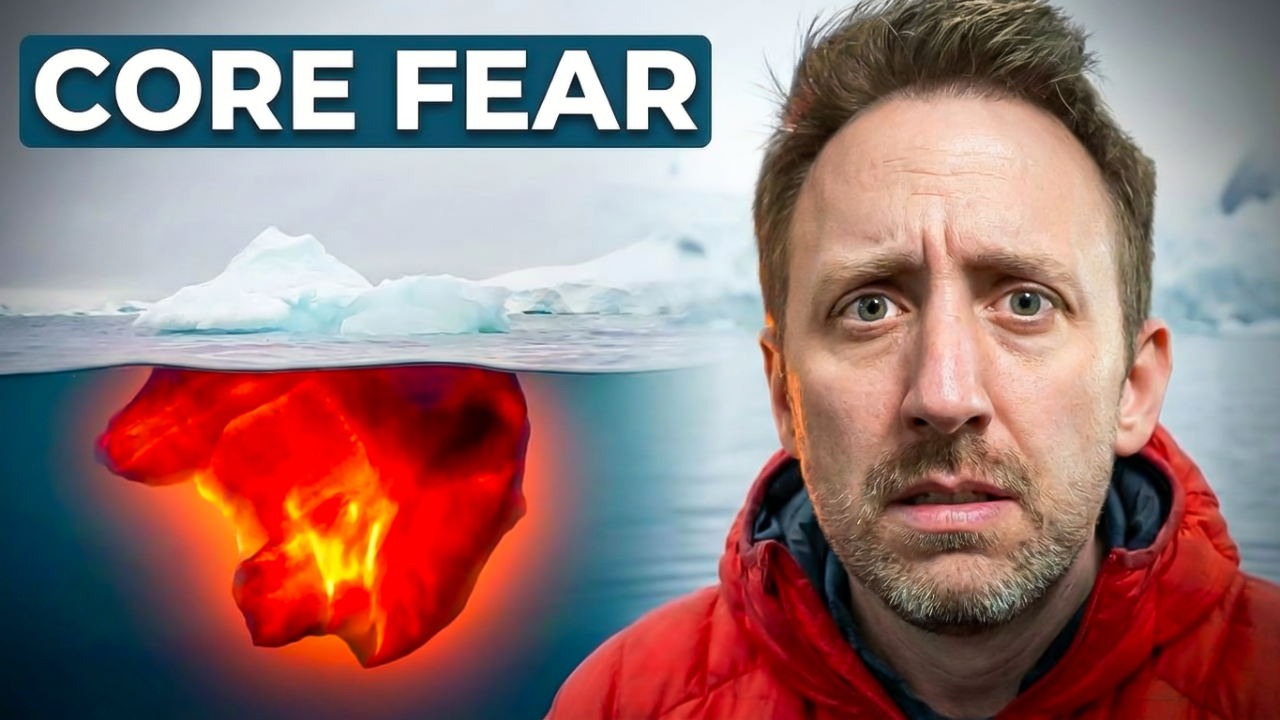
Find Your Core Fear With OCD: Stop Exposing to the Wrong Thing
Find Your Core Fear With OCD: Stop Exposing to the Wrong Thing
Download worksheet here (how to find your core fear): Core Fear Worksheet
Most people do exposures based on surface-level fears. Learn the step-by-step process to dig deeper and find your actual core fear—so you can expose to the right thing and get real results.
What Is a Core Fear (And Why Does It Matter)?
You need to know what you're actually afraid of when it comes to your OCD so you can expose to the right thing.
The core fear is the real boss.
And if you don't know what it is, you're shadow boxing the air.
There's nothing there. You're missing out.
By the end of this article, you'll know exactly how to dig down and find your actual core fear.
The Problem: You're Exposing to Surface Fears
Most people start doing exposures based on surface-level stuff:
- "I'm afraid of germs."
- "I'm afraid of being responsible for something bad happening."
- "I'm afraid to be around knives."
Okay, cool. So you:
- Touch germs
- Drive without checking
- Hold knives
Sometimes it helps.
But you might be missing the foundation.
The Deeper Truth
Underneath "I'm afraid of germs" might actually be something way deeper:
"I'm incompetent and I've failed to protect the people I love."
"I'm afraid of hitting someone with my car" is actually:
"Deep down I'm a bad person who will end up alone."
See the difference?
- The surface fear is what OCD shows you
- The core fear is what OCD is actually trying to protect you from
Why This Changes Everything
When you find the core fear, your responses change completely.
Surface-Level Exposure:
"Okay, I won't wash my hands."
Core Fear Exposure:
"Maybe I'm incompetent. Maybe I will fail my family. Maybe I'm going to ruin my entire life."
That's a completely different exposure.
The Step-by-Step Process to Find Your Core Fear
Here's the exact process I use with my clients.
(Download the free worksheet to follow along.)
Step 1: Start With a Surface Thought
The obsessive thought that bothers you the most.
The one you're doing compulsions for every single day.
The one you can't stop thinking about.
Examples:
- "What if I touch something contaminated and spread germs to my family?"
- "What if my partner's flaws mean they're not the right person for me?"
- "What if I left the stove on and the house burns down?"
- "What if I hit someone with my car and didn't notice?"
Pick one—the biggest one.
Write it down.
Step 2: Ask Yourself, "What Would Happen If That Were True?"
This is where we start digging.
If that thought were actually true, what bad thing would happen?
Example:
Thought: "What if I do something wrong and my kids get hurt?"
If that were true, what would happen?
- I'd feel anxious
- I'd feel like a fraud
- People would judge me
Okay, good. Keep going.
Step 3: Ask, "Why Would That Be a Problem?"
Why would feeling like a fraud be a problem to you?
- "Because I want to be a good person."
- "I don't want to be viewed as a bad person."
Okay, we're getting warmer. Let's keep digging.
Step 4: Ask, "What Does That Mean About You?"
What does being a bad person mean about your worth? Your future? Your relationships?
- "It means I'll lose everything."
- "My business. My relationships."
- "My kids will blame me."
- "My spouse won't want to be with me anymore."
All right, now we're cooking. We're not done yet.
Step 5: Keep Asking, "Then What Happens Next?"
"Okay, if you lose your business, then what?"
- "People will talk bad about me."
- "I'll have to shut everything down."
- "I don't want to risk hurting anybody else."
- "I'll lose everything."
"And if that happens, then what?"
- "I'll end up alone."
- "People will disown me."
- "I'll have failed being the person I've been trying to be my whole life."
There it is.
That might be the core fear.
The Core Fear for This Example:
"I will end up alone because I'm fundamentally a bad person who has failed to protect the people I love."
You see how we went from "What if my kids get hurt?" to "I will end up alone and I'm a bad person"?
That's very different.
That's what we're working with.
More Examples: Surface Fear vs. Core Fear
Let me show you the pattern across different OCD themes.
Relationship OCD
Surface: "What if my partner's flaws mean they're not the right person for me?"
Core fear: "I'll make the wrong choice and waste my entire life, proving that I'm weak and incapable of creating the life I want."
Contamination OCD
Surface: "What if I touch something contaminated?"
Core fear: "I'm incompetent and will fail to protect my family, losing my identity and my place in the family."
Hit-and-Run OCD
Surface: "What if I hit somebody and didn't notice?"
Core fear: "I'm dangerous and irresponsible. I cause harm to others. I'll end up in prison and lose everything."
The Common Patterns in Core Fears
Notice the patterns?
Core fears are almost always about:
- Being a bad person
- Losing control
- Being abandoned or rejected
- Living a lie or being fraudulent
- Feeling shame forever
- Never knowing for sure
The theme doesn't matter as much as we think.
If your theme changes, the core fear is often the same.
It's just using a different mask.
Now That You've Found It, What Do You Do?
You expose to the core, not just the surface.
How to Use Your Core Fear in Exposures
Once you know your core fear, your exposure and response prevention (ERP) changes:
Instead of:
"I'm touching this doorknob. I won't wash my hands."
You're saying:
"Maybe I'm incompetent. Maybe I will fail to protect my family. Maybe I'm going to ruin my entire life. And I'm touching this doorknob anyway."
See the difference?
You're addressing the real fear—not just the surface trigger.
Take Your Time With This
You probably didn't get all the way to your core fear just by reading this.
That's okay.
Spend some time really finding this out.
If you have a therapist, share it with them.
You might take a few days to think about this.
And at the end, if you're like: "I don't know if this is actually my core"—we might just say:
"Maybe this is, maybe this isn't. We don't need to figure everything out."
When you're ready to do exposures, make sure you're focusing on the core fear—not just the surface level.
Download the Free Worksheet
I created a free worksheet that walks you through this entire process step-by-step.
It includes:
- The exact questions to ask yourself
- Space to write out each step of the digging process
- Examples for different OCD themes
- Access to a free preview of my Master Your OCD course
Download it and work through it at your own pace.
Because once you find your core fear, everything about your OCD recovery changes.
Nathan Peterson, LCSW
OCD and Anxiety Specialist
Creator of "OCD and Anxiety" YouTube Channel
Developer of Master Your OCD Online Course
Author