Stop Living Two Lives With OCD (Merge Them With This)
Mar 04, 2026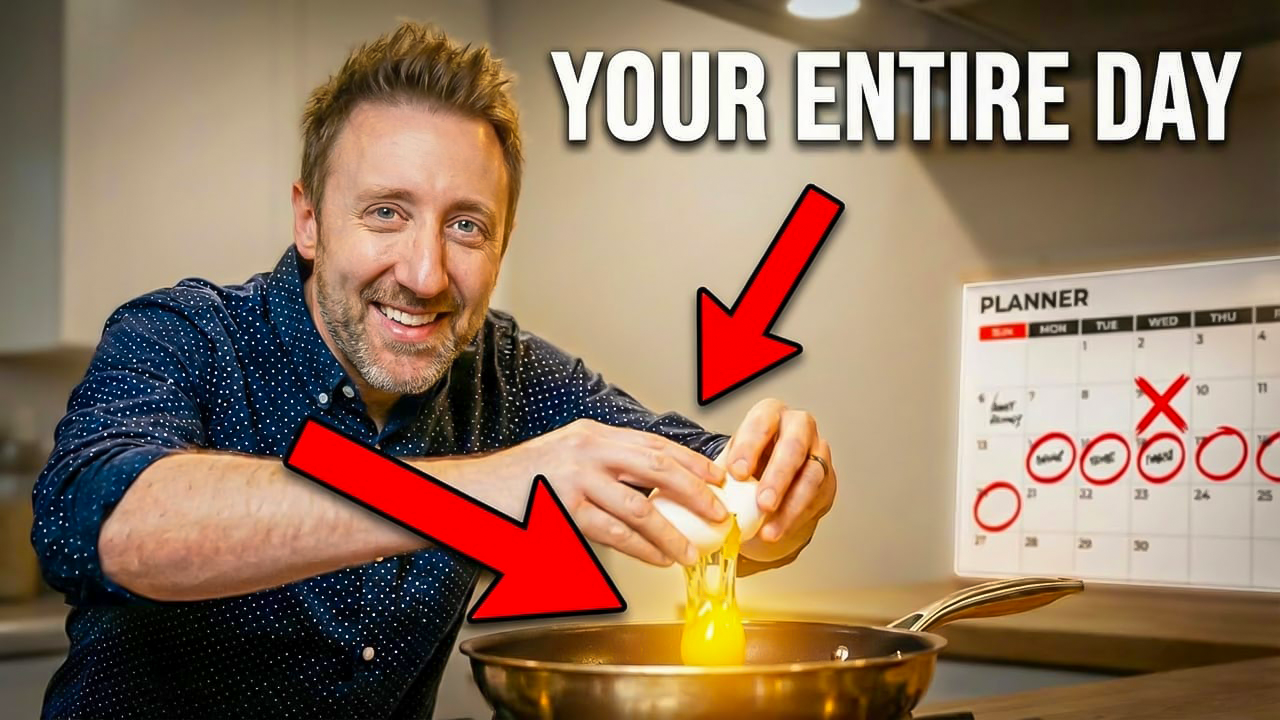
Your Entire Day Is Exposure Therapy: Turn Routine Into OCD Recovery
Your Entire Day Is Exposure Therapy: Turn Routine Into OCD Recovery
Stop waiting for the perfect time to do exposures. Your entire day is packed with OCD-crushing opportunities you're not seeing yet. Learn the exact formula for turning everyday moments into powerful exposure practice sessions.
The Problem With "Exposure Time"
Stop waiting for the perfect time to do exposures.
Your entire day is already packed with opportunities to beat OCD.
You might just not be seeing them yet.
Here's what I mean:
- Making breakfast? That's an exposure.
- Putting your kids to bed? Exposure.
- Scrolling on your phone? Exposure opportunity.
- Using an elevator at work? Exposure.
- Getting dressed in the morning? Exposure.
By the end of this article, you're going to look at your calendar completely differently.
I'm going to show you exactly how to turn boring everyday moments into OCD-crushing practice sessions.
Why Traditional "Exposure Time" Isn't Enough
The problem with traditional therapy? People think they need to set aside special exposure time.
"Every day at 3:00 on Tuesdays, I'm going to go touch this thing."
Yeah, that's helpful. We want to plan exposures.
But how many moments throughout your day do you have where you can just throw one in?
If you're only doing exposures during "exposure time," you're missing hundreds of opportunities every single day.
Your life is full of moments where OCD is already whispering at you.
Now it's your time to fight back.
The Formula: Turning Everyday Moments Into Exposures
Before we dive into examples, here's the formula we're going to use:
Step 1: What's the Action?
What are you doing anyway?
Write down the things you're already doing that are in your calendar:
- Waking up
- Using the restroom
- Washing hands
- Getting dressed
- Shaving
- Making breakfast
- Driving to work
- Going into elevators
- Reading to your kids
Get very specific. Write down step-by-step exactly what your day looks like.
I know it's going to take a long time, but it's worth it.
Step 2: What OCD-Triggering Elements Come With That Action?
Are there things you normally avoid?
Examples:
- Using the bathroom: Do you make sure you don't touch anything while you're in there?
- Going into an elevator: Do you avoid touching the buttons? Do you push them with your elbow?
- Reading to your kids: Do you avoid having them sit on your lap?
Write down all the things you're avoiding.
Step 3: What Compulsions Are You Skipping?
Don't just say "I'm not doing the compulsion."
Plan what you'll do instead.
Example:
- Action: Using the elevator
- Avoiding: Touching buttons directly
- New plan: Push the button really hard with my finger
- While in the elevator: Breathe in really deeply (instead of covering my mouth)
Write that in your calendar.
Step 4: What Responses Will You Use?
Your calendar might look crazy with all these notes.
But plan your responses ahead of time:
- "Maybe, maybe not."
- "Maybe I'll get sick. Maybe I won't."
- "Maybe something bad will happen."
- "Maybe I'll get contaminated. Amazing."
And the compulsion you're NOT doing:
"I'm not going to wash my hands because I touched that elevator button."
You've planned for it. You've written it out. You know you avoid this every day.
Now you're just going to do it.
You're Not Adding More to Your Day
Here's what's beautiful about this:
You're not really adding more to your day.
You're already there. You're just making it different—minus the compulsion.
You're taking away safety behaviors.
You're actually removing extra tasks from your life.
Yes, you'll feel anxiety. That's part of it.
But it's just for now. Things get better.
I bet by day seven, you're like: "Eh, whatever. Who cares?"
Don't Live Two Lives
I don't want you to live two lives:
- Regular life
- Exposure life
Merge them.
You're living one life.
OCD is already there. It's already calling the shots.
So let's map out your day to take control.
"But My OCD Is More Serious Than That"
I know some of you are thinking:
"Touching an elevator button? That's silly. Mine is way more serious."
- "What if I harm somebody?"
- "What if I don't know my sexual orientation?"
- "What if I do something inappropriate?"
- "This is way more serious. That's such a silly example."
I've seen this in the comments. I know.
It's the same thing.
We're risking it.
Example: Harm OCD
You avoid reading books to your kids at night because it makes you anxious.
"Maybe I'll do something wrong."
Here's your exposure plan:
- Action: Reading them a book
- What you normally avoid: Having them sit on your lap
- New plan: They're sitting on your lap
- Responses: "Maybe, maybe not, man. Yeah, feeling anxious. Maybe this will last all night. Maybe I'll do something. Ooh, I'm so scared."
You've written it down on your calendar. You're practicing it. You're feeling anxiety.
We're not saying one OCD is worse than another.
"Mine's unique. Mine's different."
That's definitely an OCD trap.
What About Unplanned Triggers?
I know you have so many tasks in the day you can't plan for:
- You spill your drink on your desk
- The email you sent has a misspelling
- Random unexpected triggers
But here's what happens:
When you start planning these exposures in your calendar and actually do them, those random ones become easier to handle.
Because you know what to do:
- What's the action I'm taking?
- What responses will I have?
- What's the compulsion I'm going to try not to do?
Your Job Is to Live Life
I say this in probably every video, but:
Your job is to live life.
I know exposures are tougher than the way I'm explaining them.
You have to really trust the process.
Start Small
If this feels overwhelming, can you just write out a few exposures?
Maybe even just one that you're willing to change.
Then the next day, add another one.
Example: The Shoe Exposure
"There's always one thing I avoid every single day: I don't touch my shoes as I put them on."
That's going to be your new thing.
You've put it in your calendar:
"Touch the shoes and love it. Amazing. Hope I get whatever I'm afraid of. Let me love it."
Do that day after day after day.
Not an afterthought. You have it written down.
You're No Longer Waiting
You're no longer saying:
"I can't do these things until my OCD or my anxiety's gone away."
No.
You do it even though you're feeling all those symptoms.
Because you're not fighting OCD anymore.
You're just ignoring its directions.
Every time you do that, you're teaching your brain:
"Huh, what? I can actually function without following your rules?"
That is recovery.
Not waiting for thoughts to stop.
Your Entire Day: Exposure Therapy
This is a lifestyle.
And I'm certain (maybe, maybe not—maybe certain) that people who do this see success.
That's just how it works.
So stop waiting for the perfect time.
Grab your calendar.
Start planning.
You've got OCD to crush.
Nathan Peterson, LCSW
OCD and Anxiety Specialist
Creator of "OCD and Anxiety" YouTube Channel
Developer of Master Your OCD Online Course
Author