Stop Surviving, Start Living: Turn Every OCD Compulsion Into an Exposure
Mar 25, 2026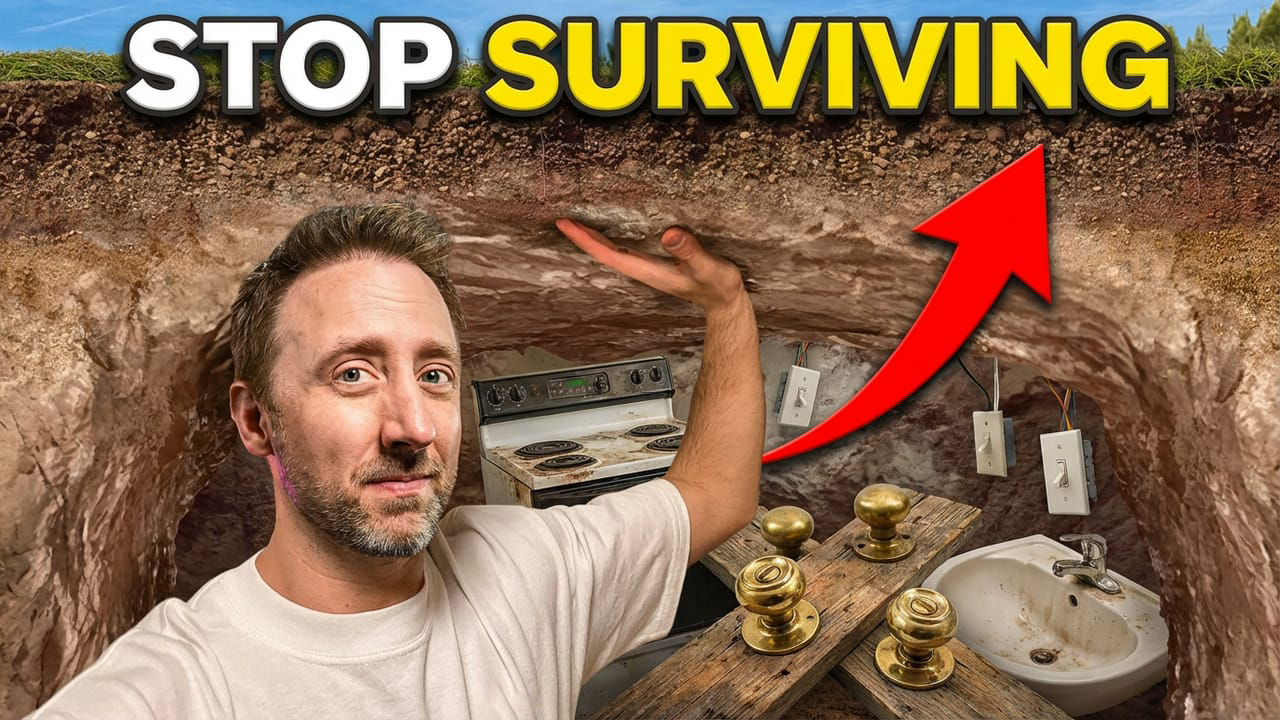
Stop Surviving, Start Living: Turn Every OCD Compulsion Into an Exposure
Stop Surviving, Start Living: Turn Every OCD Compulsion Into an Exposure
There are two options with OCD: survive in compulsion after compulsion, or live exactly how you want even with the anxiety. Learn the exact three-step system to turn every compulsion urge into an exposure opportunity.
Two Options: Survival Mode vs. Living
There are two options when it comes to your OCD.
Option 1: Survival Mode
Every day is just trying to make it to bedtime without OCD winning.
- Compulsion after compulsion
- Reassurance after reassurance
- Avoiding things that trigger you
That's not living. It's drowning.
Option 2: Living
Live exactly how you want to live.
Even if you're having all these feelings.
Even if the anxiety is there.
By the end of this article, you're going to know exactly the game plan for turning every single compulsion urge into an exposure.
Why You're Stuck in Survival Mode
You already know the survival mode pattern:
- Your brain says: "What if?"
- You do the compulsion
- You feel relief
- The next trigger hits
- Repeat
Maybe you're creative at hiding it.
Mental checking just happens in your head.
Life gets smaller and smaller.
Why This Keeps You Stuck
Every compulsion you do teaches your brain that the threat is real.
So it sticks around.
Your brain thinks: "If this is real, I need to keep warning you."
That's why you're stuck.
The Shift: From Surviving to Living
If you chose the second option—living—here's what happens:
- Your brain says: "What if?"
- You notice the urge
- You respond differently to it
- You keep doing exactly what you were doing
OCD becomes background noise.
And you're not participating in it.
That's the shift.
Stop Waiting for the Right Moment
Here's the problem:
You stop waiting for the right moment to do exposures.
Your entire day is already packed with opportunities.
You're just giving in to the compulsions instead.
We're not going to do that anymore.
The 3-Step System: Turn Compulsions Into Exposures
Every time you get an urge to do a compulsion, pull out your phone.
Write three things.
Step 1: The Action
What would you do without the compulsion?
If you didn't do the compulsion, what would you be doing?
Examples:
- "I would not be washing my hands again"
- "I wouldn't be checking this news article"
- "I would actually just be driving"
- "I wouldn't check my bodily sensations anymore"
Step 2: The Response
What will you tell your brain?
The response is often "maybe, maybe not"—embracing uncertainty.
Because your brain wants you to be certain.
That's why you're doing the compulsion.
But instead, you're like: "I don't know, man. Maybe, maybe not. Anything could happen."
Examples of "Maybe, Maybe Not" Responses:
- "Maybe I'll get sick. Maybe I won't."
- "Maybe I'll hit someone. Maybe I won't."
- "Maybe I'll accidentally say a swear word in my meeting. Maybe I won't."
Or Agreeing With It:
- "Hope I get sick."
- "Hope I'm dangerous."
- "Hope I make the wrong choice. Awesome."
- "Everyone's going to get sick because of me. Sweet."
Step 3: The Compulsion You're Skipping
You already know the compulsion we're talking about (you identified it in step one).
This just reiterates:
"Wait a second. I'm actually skipping this compulsion."
- "I'm not washing my hands"
- "I'm not avoiding my kids"
- "I'm not checking"
That's it. Three things.
Example #1: Contamination OCD (Doorknob)
You touch a doorknob.
Your brain screams: "Wash your hands right now!"
Pull out your phone:
Action: I was going to walk through the door. I was going to make lunch. I was going to eat with these hands without washing.
Response: "Maybe I'll get sick. Maybe I won't. Hope I do."
Compulsion I'm skipping: Handwashing
Example #2: Hit-and-Run OCD
You feel a bump while driving.
Your brain says: "You hit someone. Check the news. Drive back."
Pull out your phone:
Action: I was going to keep driving to my destination.
Response: "Maybe I hit someone. Maybe I didn't. Hope I did."
Compulsion I'm skipping: Checking the news, driving back to look
Example #3: Relationship OCD
You're sitting next to your partner.
Your brain says: "Check if you feel attraction to them. See if this feels right."
Pull out your phone:
Action: I was going to go to the next room, sit by my partner, and NOT check to see how I feel.
Response: "Maybe I'm with the right person. Maybe I'm not. Maybe I'm making the wrong choice. Maybe I'm going to be miserable forever. That'd be pretty awesome."
Compulsion I'm skipping: Checking. I'm not going to analyze how I feel.
Instead, I'm going to go sit by them and practice NOT checking.
Two Ways to Respond
Option A: Embrace Uncertainty ("Maybe, Maybe Not")
Keep it uncertain. We don't know. Anything's possible.
Option B: Completely Agree
Because we don't care anymore.
- "Hope I get sick."
- "Hope I'm dangerous."
- "Hope I make the wrong choice. Awesome."
- "Everyone's going to get sick because of me. Sweet."
- "Maybe I'll hit somebody. Hope I do."
Pick whatever makes your OCD angry.
We want to remove that urgency and show your brain: "Who cares?"
You can still feel anxious AND still have that feeling of "who cares? Cool. Awesome."
You're NOT Trying to Make Anxiety Go Away
If you end the exposure the second you feel relief and think: "Oh yay! Cool! The exposure worked!"
No.
We're not getting rid of the anxiety.
It might stick around. It might go away.
But that's not your job.
Your job is to respond differently to it.
Tracking Makes You Better at This
If you get really good at tracking, here's what happens:
You sit there feeling an urge: "I just feel like I need to figure out my orientation."
Okay, pull out your phone:
Action: What do I want to do? I want to go on the forums again. I want to research.
Response: They're usually about your core fear. "Maybe I'll never know. Hope I don't know. Awesome. Great."
Compulsion I'm resisting: I'm not going to go on the forums.
If you get really good at recognizing:
- Here's the urge I have
- Here are the responses I have
You get really good at knowing what to do when the time comes.
What You'll Notice: It's the Same Things Over and Over
As you start tracking these things:
- Here's the compulsion I want to do
- Here are my responses
You're going to find they're the same things over and over and over again.
That's what OCD is.
So we've got to break that pattern.
Your Job: Live Instead of Survive
Live.
Experience things even if you're feeling anxiety.
If you don't want to wait for the moment you feel the urge to do a compulsion, you probably already know the things you do.
Write down three things you can think of right now:
- What's the action I can take that brings me closer to that fear?
- What's the response? Am I going to agree with it or use "maybe, maybe not"?
- What's the compulsion I'm really going to avoid doing?
Plan it out even though you don't feel the urge to do it right now.
The more you understand about yourself, the better chance you have at fighting it.
Start Today
You're not going to be surviving anymore.
You're going to be living.
Pull out your phone right now.
Build your plan.
Stop waiting for the right moment—your entire day is already full of exposure opportunities.
Choose living over survival.
Nathan Peterson, LCSW
OCD and Anxiety Specialist
Creator of "OCD and Anxiety" YouTube Channel
Developer of Master Your OCD Online Course
Author