The 4 Pillars That Make OCD Treatment Actually Work
Sep 09, 2026
There's a good chance you've been wondering for a while: do I actually have OCD? Or is it just anxiety? Am I overreacting? Am I making this up?
Those questions alone are pretty telling. And here's what I mean by that.
If you walked into my office and sat down and said "I don't know if I have OCD" — this is exactly what we'd go through together.
THE OCD CYCLE
How OCD Actually Works
The first thing I'd pull out in session is the OCD cycle. It has four parts.
1. Trigger. This can be anything — an intrusive thought you don't want but keeps coming back, a sensation, an urge, an idea, a what-if. Every time you're around your kid. Every time you see a news story. A past memory that makes you feel like a bad person.
2. Perceived threat. The brain says: this must mean something. Let me make sense of it. And because you thought it, it must mean something about you. So the brain goes into fight-or-flight. Something is wrong. I need to figure this out.
3. Compulsion. The brain comes up with ways to fix the anxiety. That's where compulsions come in — Googling symptoms, reassurance-seeking, counting, checking, praying, ruminating, confessing, talking it through, avoiding. Anything that tries to make the anxiety go away.
4. Temporary relief, then the loop restarts. The brain feels better briefly and then says: are you sure you resolved that? If you gave them more details, maybe they'd give you a different answer. Maybe you didn't check thoroughly enough.
At the center of all of it is a fear of uncertainty. Something unresolved that the brain can't leave alone. That's the hallmark of OCD.
What I Actually Check For
After going through the cycle with someone, here's what tells me OCD might be involved:
- ✓ After you feel like you've resolved something, does your brain replay it and want you to figure it out all over again?
- ✓ Is it actually interfering with your life? Are you unable to move forward without doing a certain thing first?
- ✓ Are you pushing thoughts away all day — and the more you push, the more they come back?
- ✓ Does the same fear keep coming back time and time again, even after you've "resolved" it?
OCD tends to attack whatever you value and care about most. A new baby comes home and suddenly you're worried about harm. You get more religious and suddenly your brain says you're blasphemous. You remember something from your past and suddenly can't stop replaying whether it was your fault.
OCD finds the thing you care about most and uses it against you. That's not an accident. That's the pattern.
IMPORTANT DISTINCTION
Everyone Has Intrusive Thoughts. OCD Is What Happens Next.
Everybody has random, unwanted thoughts. I know that doesn't make people feel better — like, oh great, cool, everybody has this. But the difference is what happens next.
A brain without OCD has the thought, shrugs, and moves on. I'm not sure. Don't need to figure it out. Could be. Maybe not.
A brain with OCD cannot let it go. And even when it looks like the issue is resolved, it's never quite good enough. The brain goes back looking for more evidence. More certainty. One more check. One more confirmation.
That inability to reach "good enough" — that's OCD. The content of the thought matters less than the pattern of responding to it.
The First Thing I Give People Who Aren't Sure
For people who are unsure whether they have OCD, the first thing I have them do is track it. Next time you feel anxious, write down three things:
- ✓ What triggered it?
- ✓ What does your brain say about it — what does it think you need to do?
- ✓ What compulsion did you do to try to fix it?
If you have OCD, you'll find the same fear keeps showing up time and time again — just wearing different costumes. That pattern is the clearest signal.
WHAT TO DO
You Don't Need a Diagnosis to Start Getting Better
Whether you think you have OCD or not — I can't diagnose you, and neither can anyone online. But here's what I know: ERP works for OCD and it works for anxiety and it works for fear-driven avoidance in general.
Go face a fear. Respond differently to it. Do it again. That's the approach regardless of the label.
And if any of this post sounded familiar — if you follow the cycle, if the same fears keep looping back, if the relief never quite sticks — go see a therapist or psychiatrist who can give you a real diagnosis.
Here's something I've found: if someone genuinely wonders "do I have OCD?" — like really wonders it, the way this post is describing — it's usually pretty telling. People don't ask that question unless something is going on.
One More Thing
If you're here because you like things organized and it feels satisfying — that's not OCD. I'm going to be direct about that. OCD is not enjoying a clean desk or preferring symmetry. OCD is the anxiety and interference and compulsions that follow when things feel wrong in a way you can't shake and can't explain.
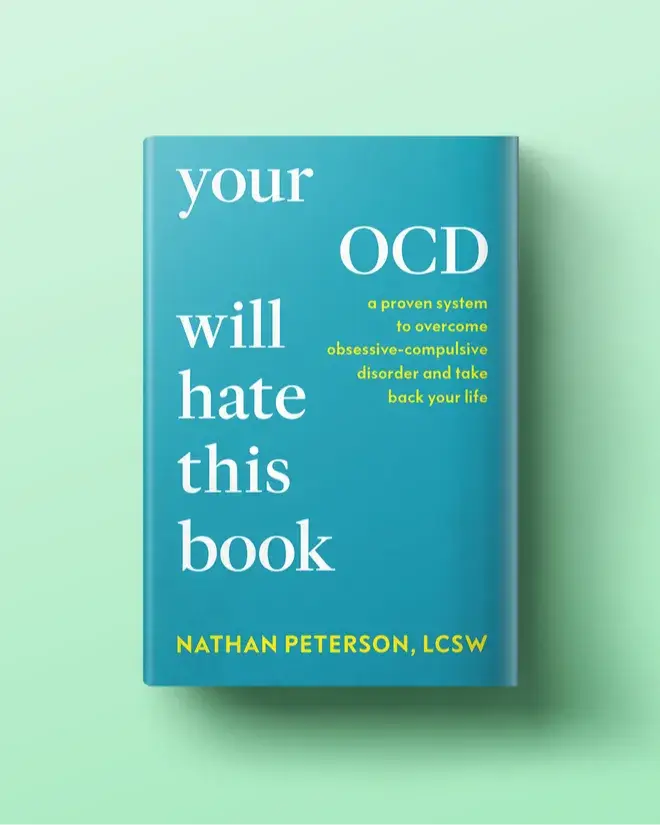
If you want to go deeper on the OCD cycle, the worksheet I walk through in the video is inside the Master Your OCD course and in Your OCD Will Hate This Book. You can also take the free OCD test to get a clearer picture of what you're dealing with.

Nathan Peterson, LCSW — Licensed therapist specializing in OCD, anxiety, and related conditions. Nathan has helped thousands of people through evidence-based treatment and education.
LCSW Licensed Therapist | 10,000+ Course Students | 24M+ YouTube Views | Penguin Random House Author
 |
Not sure what you're dealing with? Start here.Take the free OCD test to get a clearer picture of your symptoms, or explore Master Your OCD for a step-by-step ERP system that works whether you have a diagnosis or not.
|
Author