3 Mistakes That Keep Depersonalization Going in OCD
Dec 30, 2025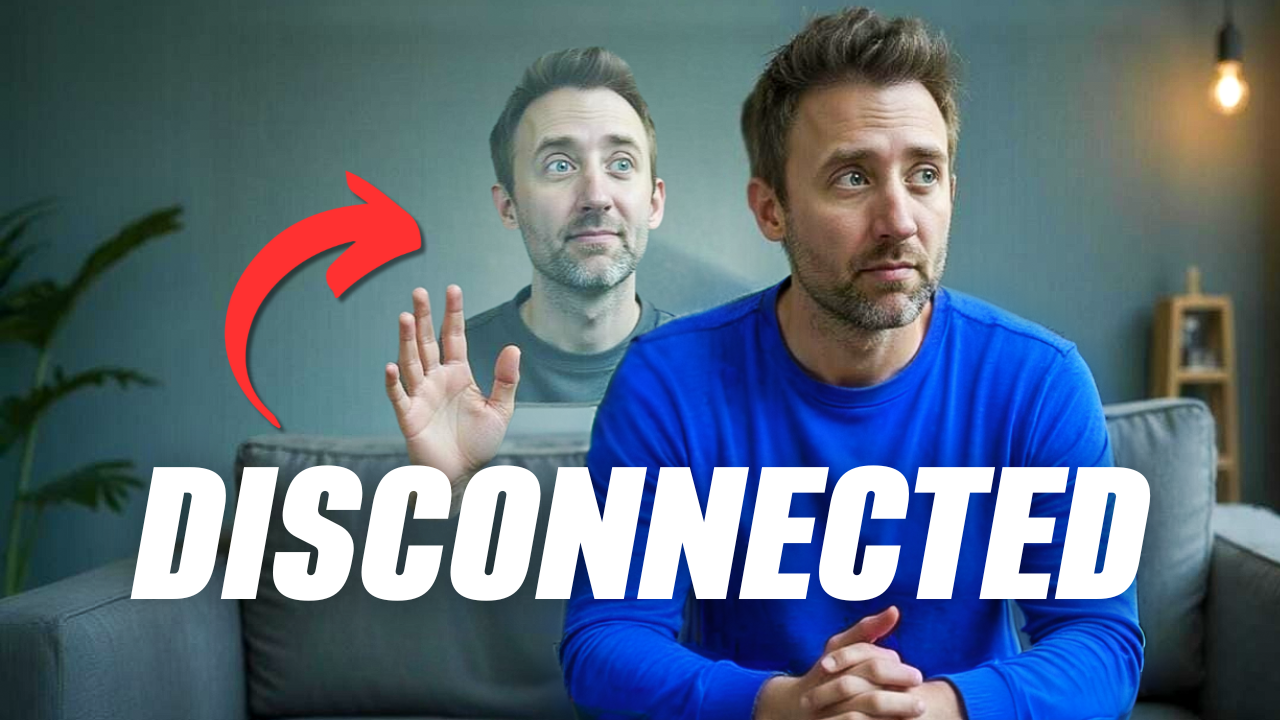
Ever feel like you're watching your life instead of living it? Like everything happening to you is behind glass and no matter what you do, you just cannot snap back to reality?
For people with OCD, that feeling can turn into yet another problem-solving moment - analyzing, checking every sensation, every emotion, trying to figure out what is wrong. But here's the deal: You're not crazy. You're definitely not losing it. This is a super common OCD trap called depersonalization or derealization.
Today, we're breaking down the three mistakes that quietly keep depersonalization going, and more importantly, what to do instead.
Understanding Depersonalization in OCD
Depersonalization is that strange feeling of being detached from yourself - like you're observing your life from outside your body. Derealization is when the world around you feels unreal, dreamlike, or distant. Both can happen with OCD, and both feed on the same mechanism: the more you fight them, the stronger they get.
These sensations can be triggered by:
- Stress or anxiety
- Lack of sleep
- Overthinking and rumination
- Panic attacks
- Even just randomly - no trigger needed
The problem isn't the feeling itself. The problem is what OCD makes you do about it.
Mistake #1: Trying to Solve, Figure Out, or Make It Go Away
OCD loves a mystery. Your mind gets stuck on that strange feeling:
- "Why do I feel unreal?"
- "What's wrong with me?"
- "How can I get this to go away?"
It's that immediate problem-solving mode. You might start:
- Googling symptoms obsessively
- Checking your sensations ("Am I really here right now?")
- Analyzing why you feel this way
- Trying different techniques to "snap back" to reality
- Seeking reassurance that you're not going crazy
It feels like you're actually helping yourself, but really you're keeping yourself more trapped. You're sending signals to your brain that say: "Keep checking to see if you're here. Keep checking to see if you're attached."
The ERP Approach: Embrace the Weird
Instead of trying to solve it, we use Exposure and Response Prevention (ERP). This means:
Expose yourself to the feeling on purpose. Say things like:
- "Maybe I'll never feel like myself again"
- "Maybe nothing's real"
- "Maybe I'm not really here"
- "I hope I feel like this all day long"
- "How amazing would it be if I just never got back to myself?"
Say it with a big smile on your face, acting like you don't care. The point isn't to believe it - it's to send ridiculous signals back to your brain that's sending you ridiculous signals.
Then don't do any compulsions after:
- No researching
- No checking to see if it worked
- No analyzing if you feel better
- No problem-solving
Sometimes it's just acknowledging the feeling: "Hey, there's that weird feeling again. Cool. Awesome. Thank you."
Mistake #2: Checking to See If You Feel Real Yet
This is the sneakiest compulsion. You wake up in the morning: "Okay, do I still feel weird?" Throughout the day: "Am I better yet? Do I feel real now?"
Common checking behaviors include:
- Touching your face to test sensations
- Looking in the mirror to see if you "look real"
- Monitoring your emotions
- Testing if things feel normal
- Comparing how you feel now to how you "should" feel
The Bruise Analogy
Think of it like a bruise. If you keep pushing on a bruise to see if it's healed, is it going to heal? No. You're just irritating it more. That's essentially what we're doing when we check - we're bringing all those thoughts, feelings, and sensations our way because we're checking to see if they're still here.
When you start bringing attention to something, you're going to notice it more. Like when you get a new car and suddenly see that model everywhere - it's not that there are more of them, you're just noticing them because you're paying attention.
The Solution: Complete Disinterest
Our job is to say: "Cool, man. I'm taking full attention away from this thing. I don't care. You're going to make me feel detached, but I'm not giving you anything."
The issue isn't that you notice the unreal feeling. It's that you start treating its absence as proof that you're okay. Stop making "feeling real" the requirement for being okay.
Mistake #3: Waiting to Feel Normal Before Living Again
This one traps almost everyone. You tell yourself: "I'll start doing things again when I feel like myself."
It sounds logical, but here's what happens:
- Your brain learns "I can only function when this feeling is gone"
- Normal life becomes another compulsion
- Waiting becomes your ritual
- The feeling gets more power over your life
Live Now, Not Later
Don't postpone living your life. Be into whatever you're doing. If you feel detached while:
- Cleaning the kitchen - "Sweet, I don't feel like my hands are real. Awesome. Still doing dishes though."
- Hanging with friends - "Cool, feeling like I'm watching from the clouds. Still going to enjoy this movie."
- Working - "Yep, nothing feels real. Still finishing this project."
The Fire Alarm Approach
Think of it like a fire alarm going off when there's no fire. The alarm (the feeling something's wrong) is blaring, but you're going to stay in the house. Eventually, it has to turn off - but that's not the goal. The goal is living your life regardless of the alarm.
When it turns off, it turns off. But you're just like: "Cool. Going to feel uncomfortable, but let me sit with it."
The Simple Game Plan
When that sensation comes up - "Is this real? I feel like I'm in the clouds" - here's your response:
- Put on a big smile
- Say something ridiculous: "Yes! Love it. Amazing. Hope I feel like this all day."
- Don't problem-solve
- Keep doing whatever you were doing
Instead of the normal catastrophizing: "I'm going to feel this forever. This is horrible. When will I get back to myself? What can I do?"
You're switching to: "I don't care anymore."
"Easier Said Than Done" - And That's Okay
Yes, this is easier said than done. You're right. But here's the thing - it takes practice. Lots of practice. You need to:
- Practice every single time the feeling comes up
- Turn your response into something ridiculous
- Ask yourself: "What is my brain telling me NOT to do because of this feeling?"
- Then go do exactly that thing (as long as it's living life)
Who Experiences This?
Both people with OCD and those without can experience depersonalization/derealization. The difference? How you respond to it.
For some, it lasts days. For others, weeks or even months. But what keeps it alive is feeding it with:
- Attention
- Fear
- Problem-solving
- Checking
- Avoidance
Stop feeding it, and it loses its power.
Common Questions About Depersonalization
Is this dangerous?
No. Depersonalization/derealization, while uncomfortable, is not dangerous. It's actually your brain's way of protecting you from overwhelming stress or anxiety. The feeling itself can't hurt you.
Will I be stuck like this forever?
Maybe, maybe not. (See what I did there?) But seriously, people don't stay in depersonalization forever when they stop feeding it with compulsions and fear. The more you accept it, the less it sticks around.
Should I tell people how I'm feeling?
Seeking reassurance feeds OCD. Instead of asking "Am I okay?" or "Is this normal?", practice accepting the uncertainty. If you need support, focus on learning skills rather than getting reassurance.
What if it gets worse?
Cool! Bring it on. The worse it gets while you're not doing compulsions, the better opportunity for your brain to learn it's not dangerous.
The Bottom Line
Depersonalization in OCD is maintained by three key mistakes:
- Trying to solve or fix the feeling
- Constantly checking if you feel real
- Waiting to feel normal before living
The solution? Stop treating it like a problem. Embrace the weird. Live your life anyway. And eventually, when your brain realizes you're not scared anymore, it'll stop sending the alarm.
You're not broken. You're not going crazy. You're just stuck in an OCD loop that feeds on your attempts to escape it. So stop escaping. Start living. Even if it feels like you're watching from behind glass.
Because here's the truth: The glass isn't real. It's just OCD being OCD. And you? You're stronger than a feeling.
Author